Download Chemical Engineering: Basic Concepts And Calculations Course
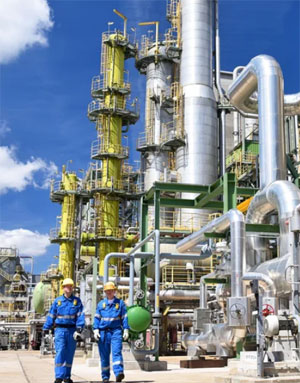
Chemical Engineering: Basic Concepts and Calculations video course download udemy An introduction to Chemical Engineering. Learn from an Engineer with experience in Oil, Gas and Chemical processing.
What you’ll learn
- Make use of the Ladder Method for basic and complex conversions
- Convert between Metric, Imperial and CGS unit systems
- Perform dimensional analysis for equations
- Convert between mass, molar and volumetric flowrates
- Interpret density and bulk density
- Interpret specific gravity and specific volume
- Understand ideal liquid mixing
- Understand mole ratios and empirical formulae
- Calculate mass and mole fractions, and mass and mole percentages
- Know when to use mass fractions and mole fractions in calculations
- Calculate density for a liquid mixture
- Calculate density for a pure gas, and a gas mixture
- Calculate average molar mass of a gas mixture
- Calculate linear velocity in a pipeline
- Understand NTP (Normal Temperature and Pressure) and STP (Standard Temperature and Pressure)
- Convert gas volume between NTP and STP
- Know under which conditions the Ideal Gas Law is valid
- Use the Ideal Gas Law to calculate gas properties
- Understand the difference between Molarity and Molality
- Calculate the Molarity and Molality of a susbstance
- Understand Normality and apply it in calculations
- Stoichiometrically react acids and bases
- Understand ratios and apply them to chemical compositions
Course content
- Section 1: Course Introduction
- Lecture 1 Thank you from Kaamil-Inaam!
- Section 2: Tutorial 1: Conversions and dimensional analysis
- Lecture 2 Tutorial 1 All Questions
- Lecture 3 Tutorial 1a: Converting flowrates
- Lecture 4 Tutorial 1b: Converting flowrates
- Lecture 5 Tutorial 1c: Converting density
- Lecture 6 Tutorial 1d: Converting density
- Lecture 7 Tutorial 1e: Converting energy (lbf, poundal, J)
- Lecture 8 Tutorial 1f: Converting kinetic energy (lbf. poundal, J)
- Lecture 9 Tutorial 1h: Converting viscosity (using base units)
- Lecture 10 Tutorial 1i: Converting viscosity (using base units)
- Lecture 11 Tutorial 1j: Converting power
- Lecture 12 Tutorial 1k: Converting flowrates
- Lecture 13 Tutorial 1l: Converting density
- Lecture 14 Tutorial 1m: Converting power (using hp and BTU)
- Lecture 15 Tutorial 1n: Dimensional analysis
- Section 3: Tutorial 2: Applied unit conversions and dimensional analysis
- Lecture 16 Tutorial 2 All Questions
- Lecture 17 Tutorial 2a: Volume calculation
- Lecture 18 Tutorial 2b: Kinetic energy calculation
- Lecture 19 Tutorial 2c: Potential energy calculation
- Lecture 20 Tutorial 2d: Reynolds number calculation
- Lecture 21 Tutorial 2e: Speed, distance, time calculation
- Section 4: Tutorial 3: Bulk density, Liquid mixing, Mass and Mole fractions
- Lecture 22 Tutorial 3 All Questions
- Lecture 23 Tutorial 3a: Using density data
- Lecture 24 Tutorial 3b: Calculating specific gravity
- Lecture 25 Tutorial 3c: Calculating density and specific volume
- Lecture 26 Tutorial 3d: Calculating liquid transfer time
- Lecture 27 Tutorial 3e: Ideal liquid mixing
- Lecture 28 Tutorial 3f: Bulk density
- Lecture 29 Tutorial 3g: Calculating bulk density
- Lecture 30 Tutorial 3h (part a): Mole fractions; Choosing a basis
- Lecture 31 Tutorial 3h (part b): Empirical formula; Choosing a basis
- Lecture 32 Tutorial 3h (part c): Mass fractions and powder mixing
- Lecture 33 Tutorial 3h (part d): Mole fractions and gas mixtures
- Section 5: Tutorial 4: Ideal gases (mixtures, STP, NTP)
- Lecture 34 Tutorial 4 All Questions
- Lecture 35 Tutorial 4a: Gas mixtures (density, molar mass, mole fractions)
- Lecture 36 Tutorial 4b: Normal Temperature and Pressure
- Lecture 37 Tutorial 4c: Density of an ideal gas
- Lecture 38 Tutorial 4d: Specific gravity of a gas
- Lecture 39 Tutorial 4e: Standard Temperature and Pressure
- Lecture 40 Tutorial 4f: Specific gravity of an ideal gas
- Lecture 41 Tutorial 4g: Density of an ideal gas
- Lecture 42 Tutorial 4h: Specific volume of an ideal gas
- Lecture 43 Tutorial 4i: Temperature of an ideal gas
- Section 6: Tutorial 5: Mixture concentrations
- Lecture 44 Tutorial 5 All Questions
- Lecture 45 Tutorial 5a: Mole fractions
- Lecture 46 Tutorial 5b (part i): Mass fractions
- Lecture 47 Tutorial 5b (part ii): Density of mixture
- Lecture 48 Tutorial 5b (part iii): Molarity
- Lecture 49 Tutorial 5c: Mass and Mole fractions of a mixture
- Lecture 50 Tutorial 5d (part a): Mole fractions
- Lecture 51 Tutorial 5d (part b): Mass fractions
- Lecture 52 Tutorial 5d (part c): Molarity
- Lecture 53 Tutorial 5d (part d): Density
- Lecture 54 Tutorial 5d (part e): Molarity
- Lecture 55 Tutorial 5d (part f): Normality
- Lecture 56 Tutorial 5e: Molar mass of an ideal gas mixture
- Lecture 57 Tutorial 5f: Mass fractions of a liquid mixture
- Lecture 58 Tutorial 5g (part a): Density of a liquid mixture
- Lecture 59 Tutorial 5g (part b): Mass fraction of a liquid mixture
- Lecture 60 Tutorial 5g (part c): Mass ratio of a liquid mixture
- Lecture 61 Tutorial 5g (part d): Molarity of a liquid mixture
- Lecture 62 Tutorial 5g (part e): Molality of a liquid mixture
- Lecture 63 Tutorial 5h (part a,b,c): Normality
- Lecture 64 Tutorial 5h (part d): Normality cont’d
Course details
- Video quality: MP4 | Video: h264, 1280 × 720
- Audio quality: Audio: AAC, 44.1 KHz, 2 Ch
- Video duration: 9h 6m
- Number of lessons: 6 Section and 64 lectures
- Language of instruction: English + .srt
- Size: 2.65 GB