Download The Encapsulation Phenomenon: Synthesis, Reactivity and Applications of Caged Ions and Molecules
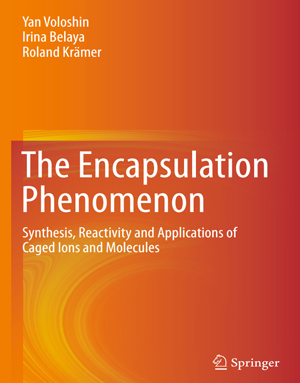
This authoritative volume offers an extensive overview of the latest developments in the chemistry of cage compounds. It explores how ions and molecules can be confined within three-dimensional caging ligands, producing a wide variety of molecular and polymeric structures through covalent, supramolecular, and coordination-based approaches. The book discusses the classification, chemical behavior, and practical significance of these systems, highlighting how encapsulation can protect guest species from their surroundings and give them distinctive physical and chemical characteristics.
Special attention is given to the unusual reactivity and selectivity that arise from molecular encapsulation and their potential applications across modern chemistry. Topics include chemical separation and molecular recognition, chiral separation, catalysis, sensing and probing technologies, molecular and supramolecular devices, and the use of cage structures as molecular carriers for encapsulated cargo.
A major strength of the book is its detailed coverage of cage-compound synthesis. More than 850 references are reviewed and supported by over 600 schemes and illustrations, providing readers with a valuable research resource. The chapters are organized according to the nature of the caging ligands—covalent, supramolecular, and coordination capsules—and further categorized by ligand families and the types of guest species involved, including neutral molecules, anions, and cations. As a result, the book provides a comprehensive reference to encapsulated species and their rapidly developing role in contemporary chemistry.
- Author (s): Yan Voloshin, Irina Belaya, Roland Krämer
- Year of publication: 2016
- Publisher: Springer
- Language: English
- ISBN: 3319277375, 9783319277370, 9783319277387, 3319802046, 978-3319802046, B01EWEMT44
- Number of pages: 653 pages
- Book format: PDF
- File size: 65 MB