Download Hybrid Water Electrolysis: Non-Oxide Electrocatalysts in Small Molecule Oxidation 2026
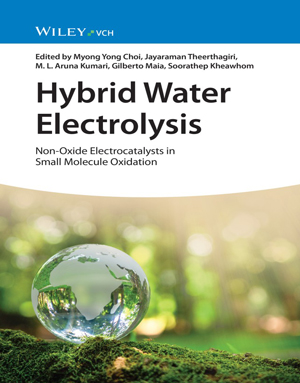
Hybrid water electrolysis offers a promising route to lower the energy demand of hydrogen production by replacing the conventional oxygen evolution reaction with the electrochemical oxidation of selected small molecules. Hybrid Water Electrolysis: Non-Oxide Electrocatalysts in Small Molecule Oxidation explores this emerging strategy, with a particular focus on non-oxide catalytic materials, including metal sulfides, carbides, nitrides, phosphides, and single-atom catalysts.
The book presents recent advances in nanostructured electrocatalysts produced using pulsed laser-based synthesis methods and examines their application in hybrid electrolyzer systems. Various organic and inorganic oxidation reactions are discussed, including the electrochemical conversion of benzyl alcohol, methanol, ethanol, urea, hydrazine, furfural, and formic acid. Particular attention is given to catalytic reaction pathways, structure–activity relationships, material stability, and the factors that influence the efficiency and selectivity of these systems.
Key topics covered include:
- Properties, catalytic activity, and reaction mechanisms of non-oxide electrocatalysts based on sulfides, carbides, nitrides, and phosphides
- Hybrid electrolysis strategies that combine hydrogen generation with the production of useful chemical compounds
- Application of single-atom catalysts to improve catalytic efficiency, reaction selectivity, and active-site utilization
- Pulsed laser-assisted fabrication of nanostructured catalytic materials with tunable composition, morphology, and surface characteristics
- Evaluation of catalyst durability and the major technical barriers affecting long-term hybrid electrolyzer operation
- Opportunities and challenges associated with scaling laboratory-scale hybrid electrolysis technologies toward industrial hydrogen production
By combining electrochemistry, catalysis, nanomaterials, and chemical engineering perspectives, this reference provides a comprehensive foundation for researchers working on sustainable hydrogen technologies. It is particularly relevant to catalytic chemists, surface and physical chemists, inorganic chemists, materials researchers, and chemical engineers interested in developing efficient electrocatalysts and next-generation hybrid water electrolysis systems.
- Author (s): Myong Yong Choi, Jayaraman Theerthagiri, M. L. Aruna Kumari
- Year of publication: 2026
- Publisher: Wiley-VCH
- Language: English
- ISBN: 3527355820, 9783527355822, 978-3527854455, B0H7K87P6J, 9783527854462, 9783527854455, 9783527854479
- Number of pages: 440 pages
- Book format: PDF
- File size: 5 MB