Download Smart Nanomaterials in Biomedical Applications
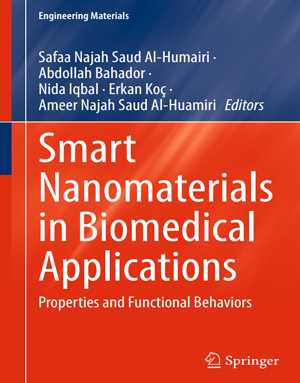
This book offers a comprehensive examination of smart nanomaterials and their growing importance in biomedical science, with particular emphasis on their mechanical characteristics, methods of characterization, and functional performance. It explores key properties and behaviors that determine how these advanced materials perform under demanding biological conditions, including mechanical strength, tribological performance, phase transformations, bioactivity, surface coatings, thermal behavior, and resistance to corrosion. Understanding these factors is essential for evaluating the stability, durability, and adaptability of nanomaterials used in modern biomedical technologies.
The book discusses how the structural and functional properties of smart nanomaterials can contribute to addressing challenges in the development of advanced biomaterials for medical diagnostics, implants, controlled drug delivery, and tissue engineering. Special attention is given to coating technologies and corrosion-resistant materials, which can improve the service life, reliability, and performance of medical devices and implants exposed to complex physiological environments. Through detailed discussions of material behavior and characterization techniques, the book connects fundamental materials science with practical biomedical applications.
Designed for healthcare professionals, researchers, engineers, and graduate students, this reference provides an interdisciplinary perspective on the development and evaluation of high-performance nanomaterials. It seeks to address existing gaps in material characterization while encouraging innovative strategies for designing biomaterials that satisfy both clinical and engineering demands. By bringing together mechanical, thermal, tribological, chemical, and biological considerations, the book highlights how smart nanomaterials can support the development of more durable, functional, and patient-focused medical technologies.
eBook details
- Author (s): Safaa Najah Saud Al-Humairi, Abdollah Bahador, Nida Iqbal,
- Publication year: 2025
- Publisher: Springer
- Language: English
- ISBN: 9789819680238, B0G2QXVP1Q, 9819680220, 9789819680221
- Pages: 471
- Book format: PDF
- File size: 9 MB