Download Density-based Reactivity Theory 2026
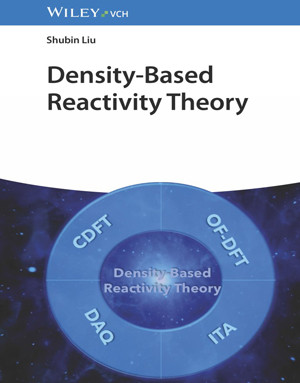
Density functional theory (DFT) provides a powerful foundation for investigating electronic structure, but connecting electron density with chemical bonding, stability, molecular function, and reactivity requires a broader conceptual framework. Density-Based Reactivity Theory develops this perspective by showing how density-driven approaches can be applied to understand and predict physicochemical behavior. The book introduces researchers to practical and theoretical methods for studying chemical reactivity, while incorporating important developments in Conceptual Density Functional Theory (CDFT), Orbital-Free Density Functional Theory (OF-DFT), Density Analysis and Quantification (DAQ), and Information-Theoretic Analysis (ITA).
A major focus of the book is the use of electron-density analysis to investigate molecular interactions and explain reactivity in chemical, biological, and materials systems. Readers are introduced to computational strategies that connect density-based descriptors with molecular properties, allowing them to analyze bonding and stability and make informed predictions about chemical behavior. The discussion also covers contemporary applications in photochemistry, catalysis, materials science, and quantum computing, demonstrating how density-based computational methods can contribute to both fundamental research and emerging technologies.
The book covers a range of theoretical concepts, computational methods, and practical applications, including:
- Systematic approaches for analyzing chemical bonding, molecular stability, molecular function, and reactivity within density functional theory frameworks.
- Applications of Conceptual Density Functional Theory (CDFT) for interpreting and predicting chemical reactivity using density-based descriptors.
- An introduction to Orbital-Free Density Functional Theory (OF-DFT) and its role in computational modeling of electronic systems without explicit orbital calculations.
- Density Analysis and Quantification (DAQ) approaches for extracting meaningful information from electron-density distributions and molecular systems.
- Information-Theoretic Analysis (ITA) for obtaining additional insight into molecular structure, electronic behavior, interactions, and chemical reactivity.
- Computational techniques for studying and improving the physicochemical properties of molecules, materials, and complex chemical systems.
- Applications of density-based reactivity methods in photochemistry, catalysis, materials science, and quantum computing.
- Theoretical foundations that support the modeling of advanced processes, novel materials, and emerging technological systems.
- Practical guidance for applying density-based calculations to investigate molecular interactions and predict reactivity in chemistry and physics research.
By bringing together fundamental theory and computational applications, Density-Based Reactivity Theory provides a useful reference for researchers working with electronic density and chemical reactivity. The material is particularly relevant to computational chemists, computational physicists, theoretical chemists, and materials scientists in academic and industrial settings. Graduate students, postdoctoral researchers, and advanced practitioners can also use the book to strengthen their understanding of density-based computational methods and apply techniques such as DFT, CDFT, OF-DFT, DAQ, and ITA to chemical, biological, physical, and materials research.
- Author (s): Shubin Liu
- Year of publication: 2026
- Publisher: Wiley-VCH
- Language: English
- ISBN: 3527355448, 9783527355440, 9783527853212, B0H8BCGPW1, 9783527853229, 9783527853212, 9783527853236
- Number of pages: 433 pages
- Book format: PDF
- File size: 6 MB