
Download Computational Methods for Molecular Modelling and Docking 2026
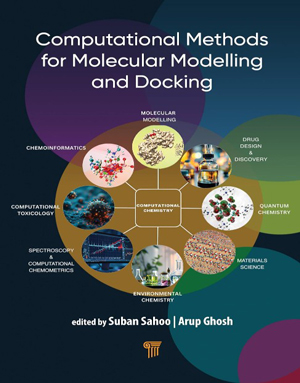
Computational chemistry has emerged as an increasingly important discipline with applications across a wide range of scientific fields, including drug discovery and development, catalysis, materials research, and bioinformatics. Modern computational approaches enable researchers to investigate molecular systems and predict important properties such as molecular structures and geometries, electronic and thermodynamic characteristics, reaction mechanisms, transition states, kinetics, and spectroscopic behavior.
A variety of computational techniques are available for molecular modelling, including molecular mechanics, density functional theory (DFT), ab initio and semi-empirical methods, as well as molecular docking and molecular dynamics simulations. The rapid development of computational resources and the introduction of accessible, user-friendly software have made these techniques much easier to apply. However, obtaining reliable results requires more than simply knowing how to operate computational software. Researchers need to understand the capabilities and limitations of different computational methods in order to select appropriate approaches, optimize computational resources, reduce unnecessary calculations, and obtain meaningful results.
This book introduces the fundamental concepts of computational chemistry, with particular emphasis on molecular modelling and molecular docking. It combines essential theoretical principles with practical examples to help readers develop a clearer understanding of computational approaches and their applications. The material is suitable for undergraduate and graduate students, postgraduate researchers, beginners entering the field of computational chemistry, experienced researchers, scientists, and academics who wish to expand their knowledge of molecular modelling and computational techniques.
eBook details
- Author (s): Arup Kumar Ghosh, Suban Kumar Sahoo
- Publication year: 2025
- Publisher: Jenny Stanford Publishing
- Language: English
- ISBN: 9815352253, 9789815352252, 9781040972182, 9781042002047
- Pages: 361
- Book format: PDF
- File size:6 MB