Download Applications of Computational Tools in Drug Design and Development 2025
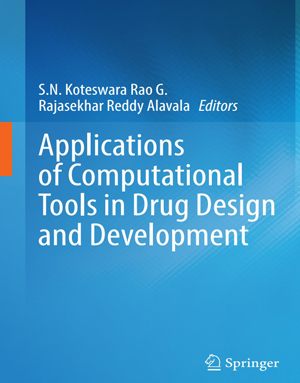
Applications of Computational Tools in Drug Design and Development book pdf download, this book provides a comprehensive overview of the role of computers and computational tools at different stages of drug discovery and development. Designed to meet the needs of a beginner to advanced learner, the book provides the information on the tools, how they work, with the latest reports on applications in drug design, drug delivery and building network pharmacology models. The book will be a useful reference for researchers, students and professionals in the field of life sciences, chemistry, pharmaceutics and bioinformatics.
Part I explores the pharmacological aspects, covering computational simulation of drug delivery at the molecular level, modeling for formulation design, and the revolutionary use of computational fluid dynamics in pharmaceutical processes. Specific applications such as pharmaceutical die filling processes, inhalation aerosol-based targeted drug delivery, and the development of inhalation compounds using in silico modeling tools are discussed. The use of computational tools in cheminformatics and their application in preformulation perspectives for drug delivery are also included.
Part II expands the scope to include solubility prediction, absorption prediction, protein binding prediction, bio-permeability prediction, toxicity prediction, and metabolism prediction. It covers the identification of potential sites of metabolism in lead molecules and computer-assisted simulation studies to understand drug-polymer interactions. Recent advances in drug likeness screening using software and online tools are also reviewed.
Part III focuses on specific therapeutic areas. The chapters examine the mechanistic understanding of anti-Alzheimer’s agents, the design of novel antidiabetic agents, and the exploration of drug design for atherosclerosis. It also covers modern computational intelligence-based drug repurposing for cancer therapeutics, computational analyses of the mechanism of action of antiepileptic agents, and rational approaches for designing antihypertensive agents. The final chapters explore drug discovery and computational strategies in the context of multi-drug-resistant tuberculosis and the network pharmacology approach to uncover the pharmacological mechanisms of natural products.
Table of contents
- Computational Simulation of Drug Delivery at the Molecular Level
- Computational Modeling for Formulation Design
- Molecular Modeling
- Molecular Structure Prediction (MSP)
- Molecular Docking Studies
- Structure-Activity Relationship (QSAR)
- Molecular Dynamic (MD) Simulations
- Drug Carrier Design
- Molecular Docking Studies
- Target Identification
- Docking Algorithm
- Scoring and Analysis
- Validation
- Lead Optimization
- Molecular Dynamic (MD) Simulations
- Understanding Drug-Membrane Interactions
- Investigation of Drug Release Mechanisms
- Optimizing Drug Carrier Design
- Prediction of Carrier-Cell Interactions
- Studying Drug Resistance Mechanisrns
- Accelerating Drug Discovery and Development
- Quantum Mechanics/Molecular Mechanics (QM/MM) Simulations
- Modeling Reactive Processes
- Treating Active Sites
- Exploring Electronic Effects
- Studying Binding Mechanics
- Predicting Reaction Rates
- Addressing Environment Effects
- Free Energy Calculations
- Binding Free Energies
- Drug Release Kinetics
- Solubility and Permeability
- Membrane Insertion and Transport
- Drug-Drug Interactions
- Virtual Screening and Drug Design
- Visualization and Analysis
- Molecular Visualization
- Trajectory Analysis
- Binding Site Analysis
- Interaction analysis
- Quantity Structure-Acttvity Relationship (QSAR) Analysis
- Statistical Analysis and Data Visualization
- Computational Fluid Dynamics-the Revolutionary Innovative Methodology in the Pharmaceutical Industry
- Population Modelling
- Design of Experiments: Understanding Optimization
- Computational Modeling of Pharmaceutical Die Filling Processes
- Inhalation Aerosol Based Targeted Drug Delivery to Upper Airways: Computational Fluid Dynamics (CFD) Approach
- Pharmaceutical Inhalation Compounds Development by Using In Silico Modeling Tools
- Computational Tools Employed in Chemoinformatics
- Applications of Computational Tools in Formulation Development
- Computational Tools for Solubility Prediction
- Advances in the Computational Prediction of Absorption Prediction of Pharmaceuticals
- Protein Binding Prediction by Computational Methods
- Physiologically Based Pharmacokinetic (PBPK) Modeling and Pharmacokinetic
- Pharmacodynamic (PKPD) Modelling
- Prediction of Bio-permeability of Pharmaceuticals with Advanced Dynamic Simulation Studies
- Accomplishment of Toxicity Prediction by CADD Tools
- Metabolism Prediction: Identification of Potential Sites of Metabolism in Lead Molecules
- Computer-Assisted Simulation Studies for Identifying Drug-polymer Interactions
- Recent Advances in Drug-Likeness Screening by Using the Software and Online Tools
- Mechanistic Understanding of the Anti-Alzheimer’s Agents with Computational Studies
- Advances in the Design of Novel Antidiabetic Agents Using In-silico Approaches
- Towards a Mechanistic Understanding of Atherosclerosis Drug Design
- Modern Computational Intelligence Based Drug Repurposing for Cancer
- Computational Analyses of the Mechanism of Action of Antiepileptic Agents
- Rational Approaches and Designing Strategies for Antihypertensive Agents
- Drug Discovery and Computational Strategies in Mutti-Drug-Resistant Tuberculosis
- The Network Pharmacology Approach to Uncover the Pharmacological Mechanism of Natural Products
eBook details
- Author (s): S.N. Koteswara Rao G. , Rajasekhar Reddy Alavala
- Publication year: 2025
- Publisher: Springer
- Language: English
- ISBN: 9819641535, 9789819641536, 9789819641543
- Number of pages: 1021
- Book format: PDF
- File size: 14 MB