Download Introduction to Glass Science and Technology 3rd Edition
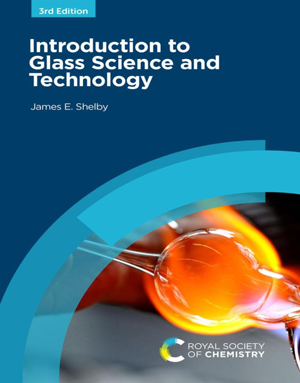
This book offers a clear and practical introduction to the science and technology of glass, covering the essential concepts behind glass formation, crystallization, phase separation, and glass structure. Detailed attention is given to structural models, particularly the oxygen balance approach, helping readers understand how the atomic arrangement of glass influences its overall behavior.
The book examines a broad range of physical, chemical, and functional properties of glass, including viscosity, density, thermal expansion, mechanical strength, optical and magnetic characteristics, and the movement of ions, atoms, and molecules through glassy materials. It also explores how diffusion influences electrical conductivity, chemical durability, and other important properties. Special emphasis is placed on the effects of phase separation, crystallization, and water content, which are often given limited treatment in introductory texts.
A substantial section focuses on the practical aspects of glass manufacturing. Topics include glass-forming raw materials, batch calculations, melting and fining operations, as well as the composition, properties, and production of commercially important types of glass. The book also introduces thermal analysis techniques and explains their application in investigating glass behavior, particularly crystallization processes.
The expanded third edition includes new material on doped vitreous silica and examines the important but frequently overlooked influence of halides on glass formation and glass properties. Another useful addition is the inclusion of complete solutions to the end-of-chapter exercises, making the book more suitable for independent study and classroom use.
Designed primarily for undergraduate students in materials science, ceramics, and inorganic chemistry, this book is also a valuable introductory reference for graduate students, engineers, and researchers who need a solid understanding of glass formation, structure, properties, and manufacturing technologies.
- Author (s): James E Shelby
- Year of publication: 2020
- Publisher: Royal Society of Chemistry
- Language: English
- ISBN: 1839161418, 9781839161414, 9781839162398, B08L23GG78
- Number of pages: 430 pages
- Book format: PDF
- File size: 3 MB